1. The Rise of Algorithmic Execution: Why Humans Cannot Compete 24/7
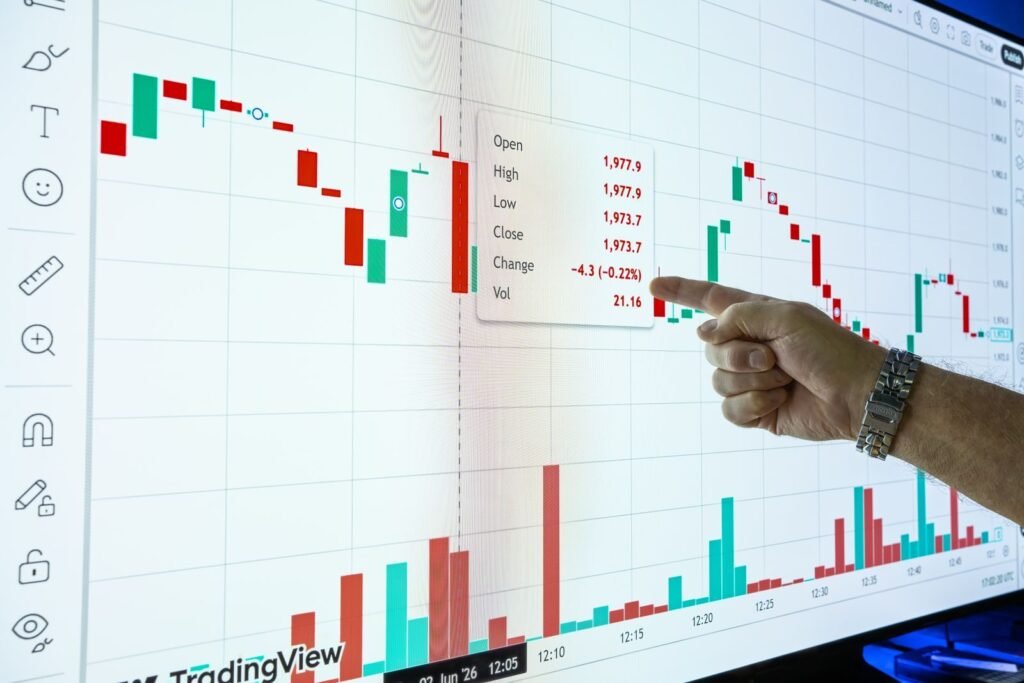
Unlike traditional legacy equity exchanges that open at 9:30 AM and close strictly at 4:00 PM with weekends off, cryptocurrency markets operate 24 hours a day, 365 days a year across hundreds of decentralized and centralized venues worldwide. For human beings bound by the biological constraints of sleep, work, fatigue, and emotional cognitive bias, maintaining manual surveillance over this constant, unyielding stream of volatility is mathematically impossible.
Enter automated trading algorithms (bots). Today, an estimated 80% to 85% of all daily volume traded across top-tier cryptocurrency exchanges is orchestrated by algorithmic programs. From institutional high-frequency market-making systems providing passive liquidity down to retail grid bots capitalizing on sideways chop, automation eliminates psychological hesitation, executes orders within milliseconds of trigger conditions, and capitalizes on micro-price inefficiencies around the clock.
However, there is an immense gulf between understanding the marketing hype of automated bots and understanding their real underlying software architecture, mathematical formulas, and risk boundaries. A poorly configured bot deployed in an adverse market regime can drain an entire portfolio just as rapidly as an undisciplined human trader. This technical deep-dive dissects the inner mechanics of the two most popular retail bot architectures: Spot Grid Bots and DCA (Dollar-Cost Averaging) Bots.
2. Spot Grid Trading Bots: Exploiting Sideways Volatility
The Grid Trading Bot is one of the most reliable and mathematically elegant trading algorithms in quantitative finance. It is engineered specifically for markets that spend the majority of their lifecycle (roughly 70% of all historical time) consolidating sideways inside horizontal price channels rather than trending aggressively in one direction.
How a Grid Bot Functions Behind the Scenes:
When you configure a Grid Bot, you define an Upper Boundary Price (e.g., $72,000 for Bitcoin) and a Lower Boundary Price (e.g., $58,000). You then instruct the bot to carve that price zone into a discrete number of grid lines (e.g., 50 intervals).
- The bot places a ladder of passive limit buy orders below the current market price at each lower grid line.
- Simultaneously, it places a ladder of passive limit sell orders above the current market price at each upper grid line.
- As price declines and fills a buy order at $60,000, the bot’s event-listener instantly fires an API call to place a corresponding limit sell order one grid interval higher at $60,280.
- As market volatility rebounds and triggers that sell order, the mathematical profit margin between those two grid lines (minus exchange maker fees) is locked into your wallet as realized cash profit, and a new buy order is instantly replenished below at $60,000.
3. Arithmetic vs. Geometric Grids: The Mathematical Step Equation
When deploying a grid bot, the configuration interface forces you to choose between two fundamentally different grid distribution models:
| Grid Model | Mathematical Spacing Equation | Profit Margin per Grid | Optimal Market Application |
|---|---|---|---|
| Arithmetic Grid | Price Difference = (Upper Price – Lower Price) ÷ Number of Grids | Variable % (higher yield at lower prices) | Tight consolidation ranges (e.g., 5% to 10% range) |
| Geometric Grid | Price Ratio = (Upper Price ÷ Lower Price) ^ (1 ÷ Number of Grids) | Constant fixed % across every single level | Wide macro ranges (e.g., 30% to 100% price channels) |
If you are running a grid on Bitcoin spanning from $50,000 to $100,000, an arithmetic grid will yield an unnecessarily tiny percentage profit at the $100,000 level and a wide percentage at $50,000. A geometric grid enforces a uniform profit margin (e.g., exactly 0.75% net per grid transaction) regardless of whether Bitcoin trades at $52,000 or $98,000.
4. Dollar-Cost Averaging (DCA) Bots: Safety Orders and Martingale Logic
While Grid Bots seek continuous micro-arbitrage in sideways conditions, DCA (Dollar-Cost Averaging) Bots are designed to strategically average down your entry price during adverse market pullbacks, allowing you to exit in net profit upon the slightest technical rebound.
A DCA bot begins by executing a Base Order based on a technical indicator trigger (such as a 15-minute RSI dipping below 30 or a MACD bullish crossover). If the market rallies immediately, the bot closes the trade at your preset Take-Profit threshold (e.g., +1.5%). However, if the market declines, the bot triggers safety orders:
- Price Deviation Step: At each predefined price decline (e.g., every 2% drop), the bot automatically executes a safety order.
- Volume Multiplier (Martingale logic): Sophisticated bots scale position sizes geometrically (e.g., buying 1.5x or 2.0x larger volume on subsequent safety orders). This aggressively drags down your volume-weighted average entry price.
- The Rapid Rebound Exit: Because your average entry price has been drastically reduced through tiered capital injection, the asset does not need to return to its original starting price for you to break even. A modest 1.5% to 2.0% technical relief bounce is sufficient to liquidate the entire multi-order batch into clean net profit.
5. The DCA Safety Order Scaling Matrix: Volume vs. Price Multipliers
To understand how a DCA bot manages capital, examine this realistic execution matrix for a $1,000 allocated trade on Ethereum:
| Order Step | Price Deviation (%) | ETH Price | Order Size ($) | Average Entry Price | Required Price to Exit (+1.5%) |
|---|---|---|---|---|---|
| Base Order | 0.0% | $3,000 | $100 | $3,000.00 | $3,045.00 |
| Safety Order 1 | -2.5% | $2,925 | $150 | $2,954.50 | $2,998.80 |
| Safety Order 2 | -5.0% | $2,850 | $225 | $2,903.20 | $2,946.70 |
| Safety Order 3 | -8.0% | $2,760 | $337 | $2,839.80 | $2,882.40 |
Notice the magic of the mathematics: despite Ethereum dropping a full 8% from the initial entry at $3,000 down to $2,760, the bot’s average entry price was dragged down to $2,839.80. A minor relief rally back up to $2,882 (which is still 4% below the original $3,000 entry!) fully triggers the take-profit order, banking a profit on the entire $812 deployed capital.
6. Architectural Showdown: Grid Bots vs. DCA Bots
| Architectural Dimension | Spot Grid Bot | DCA Safety Order Bot |
|---|---|---|
| Optimal Market Condition | Sideways Consolidation / Rangebound Volatility | Trending Markets with Periodic Deep Pullbacks |
| Capital Efficiency | Moderate (Capital split across 30-100 orders) | High (Capital deployed only during active dips) |
| Profit Realization Pattern | Continuous cash flow (hundreds of micro-profits) | Lumpy cash flow (single lump-sum exits) |
| Worst-Case Market Scenario | Price dumps below bottom grid boundary | Sustained, endless bear trend exhausts safety orders |
| Technical Complexity | Low to configure / set-and-forget | Requires tuning step scales & technical triggers |
7. Enterprise API Security Architecture: HMAC-SHA256 & IP Whitelisting
Connecting a third-party bot platform (such as 3Commas, Pionex, TradeSanta, or a proprietary Python script) to your centralized exchange requires generating an API Key and Secret Key. Never compromise on API security hygiene.
1. Strictly Disable Withdrawals: NEVER check the “Enable Withdrawals” box when generating an API key. A trading bot only requires “Read Information” and “Enable Spot/Futures Trading” permissions. If a bot service demands withdrawal permissions, it is an immediate scam.
2. Enforce Static IP Whitelisting: Always restrict your API keys to the dedicated static IP address of your cloud virtual private server (VPS). If an attacker intercepts your API secret, they are completely blocked from executing orders from any unauthorized IP address.
8. Quantitative Backtesting Pitfalls: Surviving Curve Fitting and Regime Shifts
When deploying bots, amateur traders frequently fall into the trap of curve fitting (overfitting). They run historical backtests over the past 90 days and continuously tweak grid spacings, multipliers, and indicator lengths until the backtest shows an astonishing 800% annual return.
In quantitative software engineering, this is known as overfitting to past historical noise. Financial markets are non-stationary dynamic systems. A parameter configuration that produced spectacular returns during a low-volatility uptrend will suffer catastrophic drawdown when the market transitions into a high-volatility structural bear market. Always validate bot strategies with out-of-sample data and run paper trading (demo forward testing) for at least two to four weeks before committing real funds.
9. Flash Crash Defense Protocols: Emergency Stop-Losses and Circuit Breakers
What happens when a regulatory headline, exchange hack, or sudden liquidity crisis causes Bitcoin to drop 25% in fifteen minutes?
- The Grid Bot Trap: Once price crashes through your lower grid limit, the bot is left holding 100% of its allocated capital in depreciated crypto tokens, unable to execute further trades until price crawls back into the grid range.
- The Solution: Implement a hard Stop-Loss Boundary below your bottom grid line that automatically converts the entire position back to stablecoins (USDT/USDC) if the structural floor is violated.
10. Build vs. Buy: Custom Python Scripts vs Commercial Cloud Bots
Should you code your own bots or pay for a commercial cloud subscription?
- Commercial Cloud Platforms: Provide intuitive graphical interfaces, mobile push notifications, pre-built templates, and zero server maintenance. Ideal for 90% of traders seeking standard grid or DCA functionality.
- Custom Python Bots (CCXT / AsyncIO): For advanced quants who require proprietary order execution logic, multi-exchange cross-arbitrage, or custom machine learning sentiment triggers running on an isolated AWS EC2 instance.
11. Frequently Asked Questions (FAQs)
Are crypto trading bots guaranteed to make passive income?
No. Bots are merely execution tools; they execute your chosen strategy with mechanical precision. If your underlying strategy is flawed or if market conditions violate your bot’s assumptions, a bot can lose capital just as quickly as a human trader.
Can I run trading bots on decentralized exchanges (DEXs)?
Yes. With the maturation of high-speed Layer 2 networks like Arbitrum, Base, and Solana, automated bot execution via smart contracts and DEX APIs has become highly cost-effective with negligible gas costs.